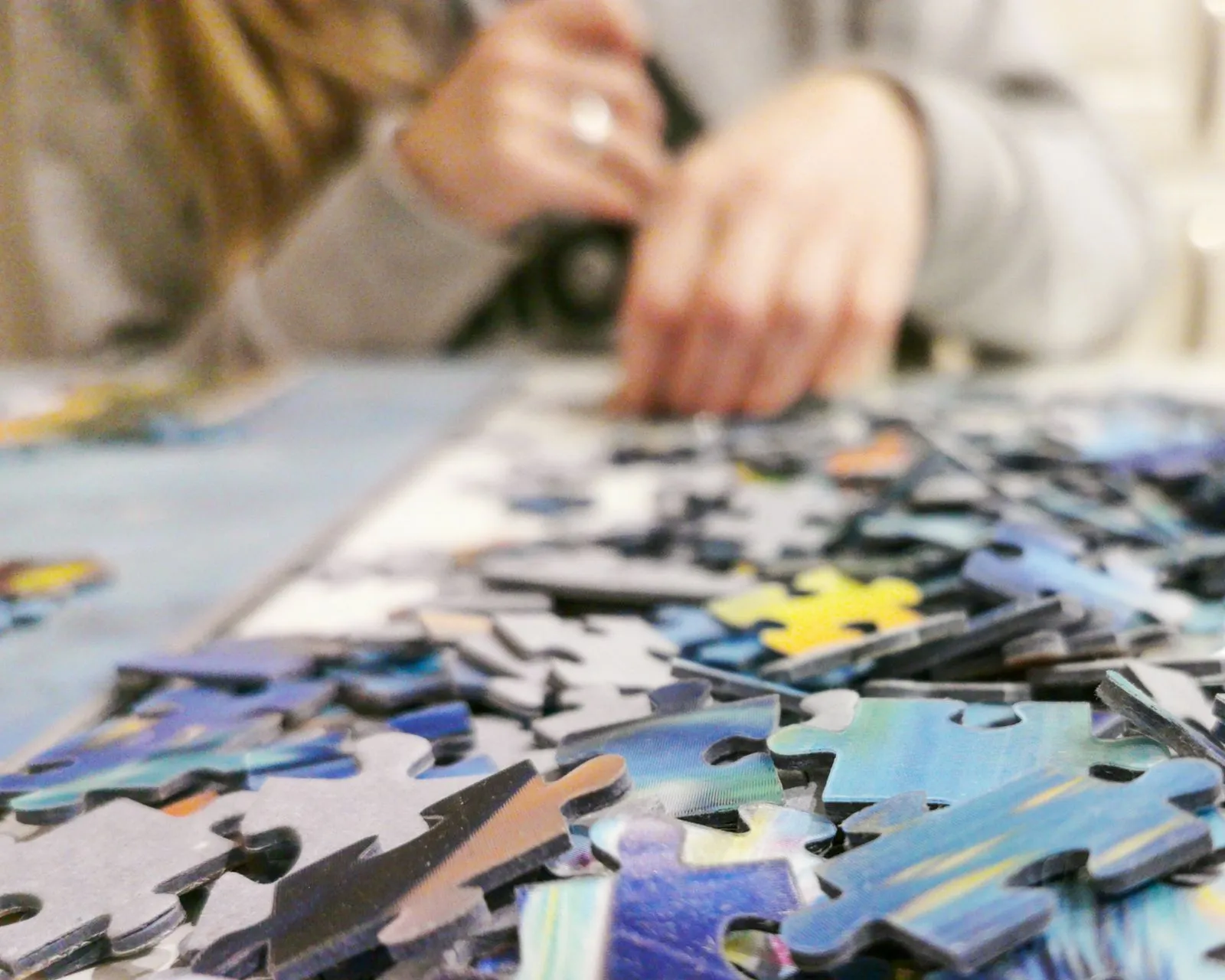
A jigsaw puzzle’s piece count offers a useful starting point, but it does not tell the whole story. A lower-count puzzle with a nearly uniform sky can feel trickier than a larger one with distinct colors and clear objects. Think about the image, the puzzle’s design, and how much time you want to spend sorting and searching. Choosing with those factors in mind helps you find a satisfying challenge without making the experience feel like a chore.
Use piece count as a starting point
Fewer pieces usually mean less sorting and a quicker route to the finished image, making a smaller puzzle a comfortable choice for a first try or a short session. More pieces create a larger field of small shapes and require more time, space, and patience. If you are unsure, choose a count close to one you have completed before, then adjust based on whether that puzzle felt relaxing or demanding.
Check the puzzle’s age or experience guidance, if provided, but treat it as a general reference rather than a measure of your ability. Piece sizes also vary. Larger pieces can be easier to handle and distinguish, while smaller pieces may call for better lighting and more room to sort. Consider who will work on the puzzle and whether you want to assemble it alone or with others.
Look closely at the image
Images with distinct objects, colors, and sections give you more ways to sort pieces. A house, garden, or busy street scene may offer recognizable edges and clusters you can build separately. Strong color changes help, too: a red object against green plants is easier to isolate than a broad area made up of similar shades.
Large stretches of sky, water, grass, or a single color can raise the difficulty, even when the piece count is modest. Repeated patterns can also make pieces look alike. Before buying, study the full image and notice how much contrast and variation it has. If you enjoy a tougher search, choose a design with broad, similar-looking areas; for a gentler session, favor clear details and varied colors.
Check features beyond the picture
Piece shape affects how easily you can use the cut and tabs to narrow down where a piece belongs. Some puzzles have varied shapes, while others use more uniform cuts. A reference poster or clear image on the box can help you check details as you work. If you prefer to solve without looking back and forth, consider how easy it will be to keep the image visible.
Also think about the finished puzzle’s dimensions and your work surface. A puzzle that fits comfortably is easier to sort and leave in progress. If you plan to work with family or friends, a design with separate regions gives people room to build different sections. For solo solving, a smaller footprint or a puzzle that can be moved safely may fit your routine better.
Match the challenge to your mood
Choose a puzzle based on the experience you want, not just the number on the box. For a calm evening, look for a familiar piece count and an image with several clear sections. For a longer project, try more pieces or a less varied image. If you are returning to puzzling after a break, a manageable design can help you rebuild your rhythm before taking on a harder one.
You can make any puzzle easier to approach by sorting edge pieces first, grouping pieces by color or pattern, and assembling recognizable sections before joining them. Work in short sessions and pause when progress slows. If the puzzle feels harder than expected, changing your sorting method or improving the light may help more than forcing yourself to continue.
A comfortable challenge comes from balancing piece count with image detail, piece shape, and the space and time you have available. Start with a design that gives you a few clear ways to make progress, then adjust the difficulty as your preferences change. Browse Mindful Maze for puzzle options that fit the kind of solving experience you want.